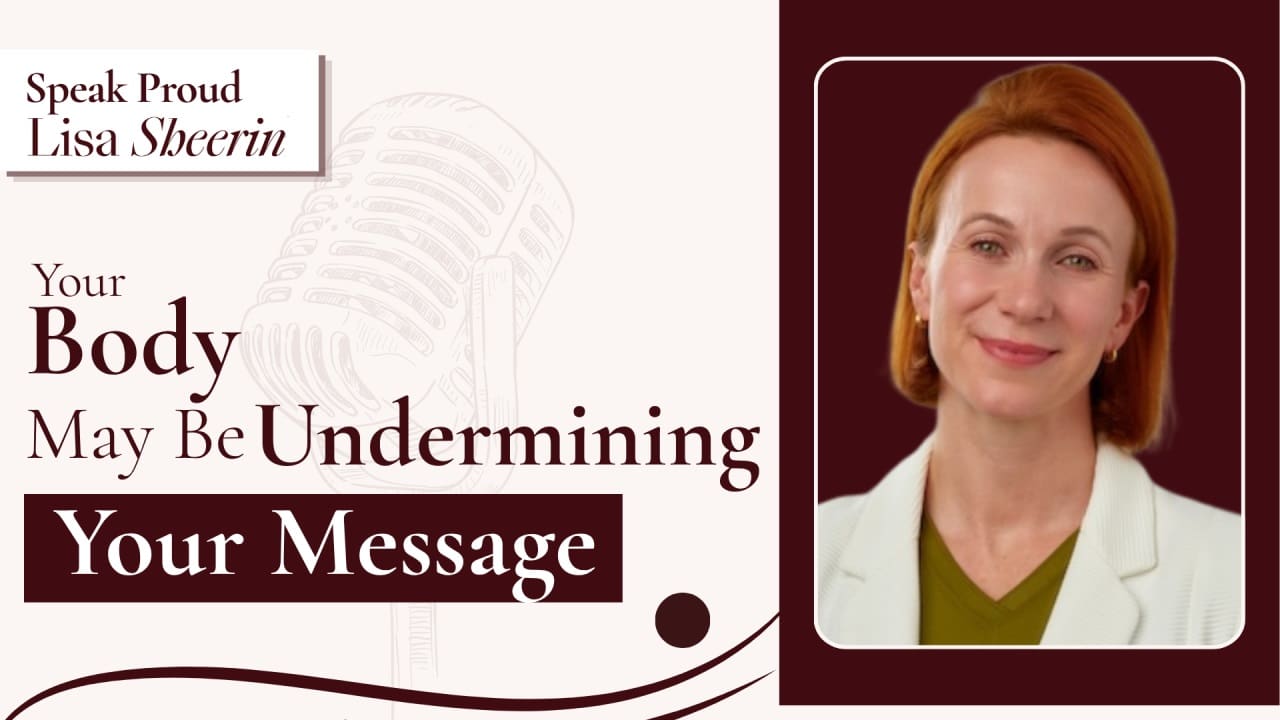
You can prepare every word of a presentation, know your subject inside out and have a message that deserves to be heard. But what happens when your body language tells a different story?
I often see highly experienced leaders focus almost entirely on what they want to say. They refine their slides, rehearse their opening and make sure they have all the right information. Yet when they stand up to present, something about the way they move, speak or hold themselves can undermine the message they’ve worked so hard to prepare.
It might be the way they stand behind a lectern, the lack of eye contact, the constant movement or the voice that suddenly becomes quieter when they reach an important point. Individually, these things might seem insignificant. But together, they can change how an audience experiences the person speaking, particularly when you’re presenting to people whose confidence and attention really matter.
Your audience is watching as well as listening
When you’re presenting to a board, delivering a keynote or speaking to senior stakeholders, your audience isn’t just processing your words. They’re also taking in how you communicate physically.
Think about a speaker who delivers an excellent argument but spends the entire presentation looking at their slides. Or someone who makes an important recommendation but speaks so quickly the audience struggles to absorb it. The content might be impressive, but the delivery can make it harder for the message to land.
Your posture, eye contact, gestures, facial expressions and movement all contribute to the experience. They can help people stay connected to what you’re saying, or distract them from it.
This doesn’t mean you need to choreograph every movement or become conscious of every gesture. Trying to manage every aspect of your body language can actually make you look less natural. The aim is to become aware of the habits that might be getting in the way of your message.
The difference between movement and presence
One of the things I find interesting about presentation skills is how differently people use the space around them.
Some speakers barely move. They stay rooted to one spot, perhaps holding onto a lectern or gripping their notes throughout the presentation. Others move constantly, pacing from one side of the stage to the other, sometimes without any clear purpose.
Neither approach is automatically right or wrong. What matters is whether your movement supports what you’re communicating.
Moving towards the audience when making an important point can create a sense of connection. Standing still can give a message greater weight. A well-timed gesture can help explain an idea, while unnecessary movement can compete with it.
The same is true of eye contact. Looking at your audience helps create a relationship with them, rather than making them feel as though they’re watching you deliver a speech to the back wall.
Physical presence isn’t about taking up as much space as possible. It’s about using your body deliberately, so your audience can focus on what matters.
Your voice and body need to work together.
There’s a particular moment in presentations when the gap between what someone wants to communicate and what their delivery actually conveys becomes noticeable.
A leader might be explaining a significant business decision, but their voice is rushed, their shoulders are tense, and their gestures become smaller. They may be entirely confident in the decision itself, yet the audience doesn’t necessarily experience that confidence through the delivery.
This is where voice and physical presence become particularly important. Your breathing, posture and movement can all influence how your voice sounds. If you’re holding tension in your body or rushing through your words, it becomes harder to communicate with the clarity and vocal variety your message deserves.
My background as a professional actor and commercial voiceover artist has given me a particular interest in this relationship. In performance, the voice and body are never separate from the story being told. The same principle applies when a senior leader is presenting an important recommendation or delivering a keynote.
You don’t need to become an actor to be an effective speaker. But understanding how your body influences your voice can give you much greater control over how you communicate.
Stop trying to look like a confident speaker
One of the biggest traps for experienced leaders is trying to copy what they believe a confident speaker should look like.
They may force themselves to use bigger gestures, move around more or adopt a particular speaking style they’ve seen someone else use. Sometimes this makes them feel even less comfortable, because they’re concentrating on performing confidence rather than connecting with their audience.
The most engaging speakers aren’t necessarily the ones who make the biggest gestures or command the most physical space. They’re the ones whose delivery feels appropriate to their message and genuine to who they are.
A thoughtful, measured speaker can be just as compelling as someone who is naturally energetic. What matters is whether their voice, body language and message work together.
For senior leaders, this is particularly important. You already have the expertise and experience. The opportunity is to make sure your delivery allows people to recognise that, rather than distracting them from it.
What does your presence communicate before you finish speaking?
When the stakes are high, the small details of your delivery can make a real difference to how your message is received. Whether you’re presenting to the board, speaking at a conference or making a business-critical recommendation, your audience needs to be able to follow your thinking and engage with what you’re saying.
That doesn’t require a flawless performance. It requires an understanding of how you use your voice, body and message, and the ability to adapt your delivery to the situation.
This is something you can develop. You can become more aware of how you stand, move, make eye contact and use your voice, without losing the natural qualities that make you an individual communicator.
If you’re curious about how your delivery, presence and clarity work together when the pressure rises, I’ve created a short Executive Presence Assessment to help you explore this. You’ll find it in the Featured section of my LinkedIn profile. It takes just five minutes and gives you insight into which area is currently working hardest for you, and where greater consistency could make a difference.
What do you find most challenging when presenting to a senior audience: knowing what to do with your body, using your voice effectively or keeping your audience engaged?

Lisa Sheerin, ICF PCC Executive Coach | Transforming Confidence, Communication & Leadership
Lisa works as an executive public speaking coach, actor, and group fitness instructor with over 20 years of experience. A graduate of a three-year drama school program in London, she began her career in theatre and film, where she faced and overcame imposter syndrome. Today, she empowers others to embrace their authenticity and transform self-doubt into confidence, combining her acting expertise, fitness training, and passion for personal growth. Her mission is to guide others toward a life where they can speak and live proudly.

Comments will display here