Your expertise is not always heard the way you intend.
Many senior leaders assume that credibility comes from knowledge, experience and results, but in high-pressure moments, people do not only judge what you say. They judge how confidently, clearly and calmly you deliver it. A leader can have the right strategy, the strongest data and the best intentions, yet still struggle to create the level of influence their role demands if their voice does not carry authority.
This is one of the biggest communication gaps I see in senior professionals. The issue is rarely capability. It is the difference between having expertise and making that expertise felt in the room. Executive presence begins before the first slide appears or the first decision is discussed. It starts with the way you enter, speak and hold attention.
Vocal authority is not about sounding louder
When people hear the phrase “executive voice”, they often imagine a louder, deeper or more commanding way of speaking, but true vocal authority is not about performing confidence or trying to sound like someone else. It is about creating trust through pace, tone, clarity and control.
Under pressure, even highly accomplished leaders can fall into patterns that reduce their impact. They may speak too quickly, add unnecessary detail, soften important points or allow uncertainty to creep into their delivery. These habits are often invisible to the speaker because they are usually a response to pressure, not a reflection of ability.
The most influential communicators understand that their voice is a leadership tool. They use pauses to create emphasis, vary their pace to maintain attention and deliver key messages with intention. The result is not a more theatrical performance, but a more authentic expression of their expertise.
The boardroom does not reward information overload
One of the biggest challenges for technical experts moving into senior leadership is learning that communication is no longer about proving everything you know. At executive level, influence comes from making complex ideas clear, relevant and memorable.
Many leaders have spent years being rewarded for precision and detail. Those strengths remain valuable, but the communication demands change as responsibility grows. Senior stakeholders need confidence that you understand the detail, but they also need to trust your judgement, your clarity and your ability to make decisions.
This is why message discipline matters. A powerful executive message is not one that contains every possible detail. It is one that identifies what matters most and delivers it with confidence.
Pressure reveals the habits that shape your reputation
The moments that matter most are often the moments where communication habits become most visible. A major presentation, a CEO interview, a challenging stakeholder conversation or a board discussion can expose patterns that remain hidden during everyday conversations.
When pressure rises, the body and voice often respond automatically. Breathing changes, pace increases and the desire to be understood can lead to over-explaining. These reactions are natural, but they can unintentionally send signals that are different from the leader’s intention.
Developing executive voice is about building awareness and control. Leaders who understand how pressure affects their communication can make deliberate choices rather than relying on instinct. They create space, deliver with confidence and allow their expertise to land.
Your voice should match the level you operate at
The most successful leaders are not necessarily the loudest people in the room. They are the people who communicate with enough clarity and presence that others trust their perspective. Their authority comes from alignment between what they know, how they feel and how they communicate.
Executive voice is not about changing who you are. It is about removing the barriers that prevent others from recognising your expertise. When your voice, message and presence work together, your communication becomes a reflection of the leader you already are.
If you are ready to strengthen your executive presence and ensure your communication matches your ambition, you can book a conversation with me or send me a DM. I would love to hear where you want your voice to have greater impact.
What is one communication habit you would most like to improve when the pressure is on?

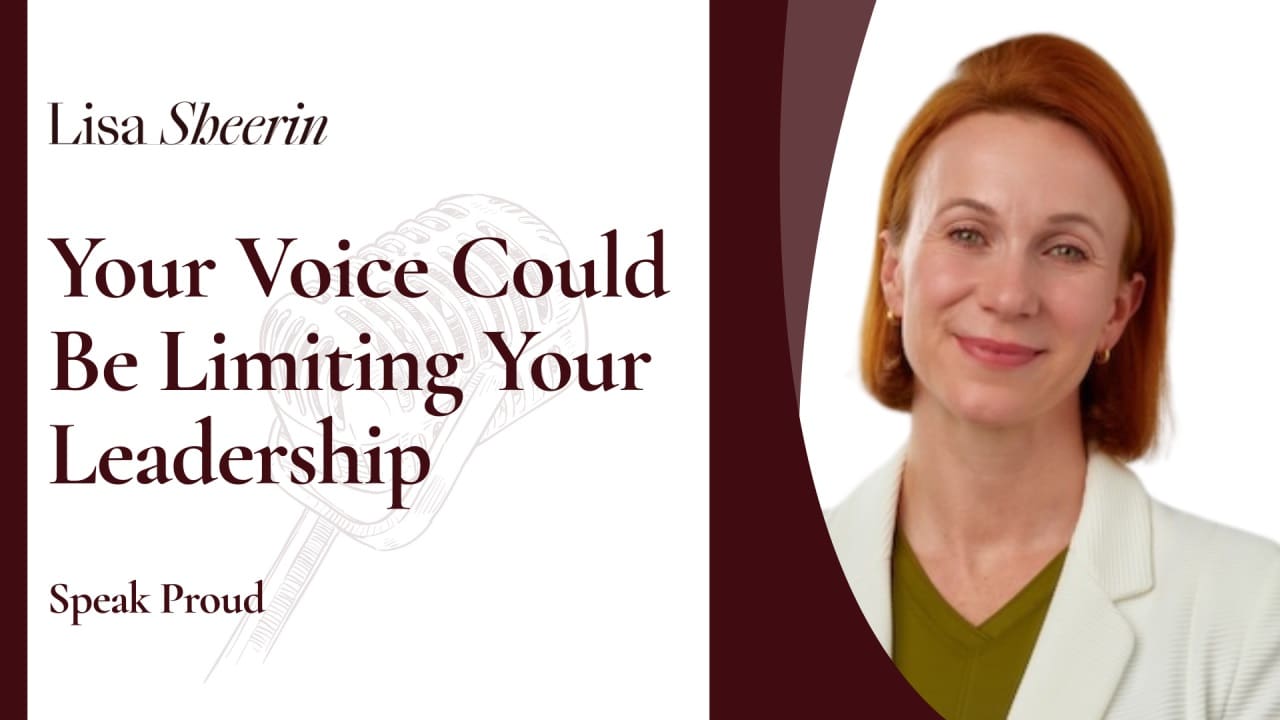
Lisa Sheerin, ICF PCC Executive Coach | Transforming Confidence, Communication & Leadership
Lisa works as an executive public speaking coach, actor, and group fitness instructor with over 20 years of experience. A graduate of a three-year drama school program in London, she began her career in theatre and film, where she faced and overcame imposter syndrome. Today, she empowers others to embrace their authenticity and transform self-doubt into confidence, combining her acting expertise, fitness training, and passion for personal growth. Her mission is to guide others toward a life where they can speak and live proudly.

Comments will display here