You’ve prepared for the obvious questions. You know your achievements, your examples and your reasons for wanting the role. Then someone on the panel asks something you genuinely weren’t expecting.
For a moment, everything stops.
You have a few seconds to decide what to do next: jump straight in and hope the answer emerges as you speak, fill the silence with unnecessary context, or start qualifying your answer before you’ve even made your point.
That small moment can tell an interviewer far more than whether you’ve memorised the right answer.
Senior interviews are not really tests of memory.
At senior level, most candidates are capable of preparing thoroughly. They know their career history, their commercial results and the projects they’ve led. They can talk about challenges, successes and lessons learned, but a promotion panel or executive interview is rarely interested only in what you’ve already done. They’re also trying to understand how you think, how you make decisions and how you respond when you don’t have a prepared answer in front of you.
That changes the nature of the conversation. You’re no longer simply demonstrating your knowledge. You’re demonstrating judgement in real time, and that’s where preparation can only take you so far.
Don’t be afraid of the pause.
One of the most useful things you can learn in a high-stakes interview is that you don’t have to answer immediately.
A question lands. You pause. You breathe. You think about what’s actually being asked.
To the candidate, that pause can feel uncomfortable. It can feel as though everyone is waiting and that silence must mean you’re struggling. So the temptation is to start talking, often with a sentence such as “that’s a really interesting question…”, before launching into an answer that hasn’t quite formed yet, but a considered pause can communicate something very different. It suggests you’re comfortable thinking before speaking. It allows you to choose the most relevant part of your experience rather than throwing everything you know at the panel. And it gives your voice a chance to stay grounded rather than shifting into a faster, more pressured delivery.
You don’t need to eliminate the nerves. You need enough control not to let the nerves decide how you answer.
The danger of proving too much
There’s another pattern I see in senior conversations: the more important the opportunity feels, the more information people try to give.
A candidate is asked about a particular decision, but instead of answering directly, they provide the history of the project, explain the organisational context, introduce three different stakeholders and eventually arrive at the point they could have made in two sentences.
It comes from a good place. They want the panel to understand the complexity of what they’ve dealt with. But senior communication often requires the opposite instinct.
You need to trust that you don’t have to prove everything you know in every answer. Give the panel the judgement, decision or insight they’re actually looking for, then add context where it helps. The question isn’t how much you can tell them. It’s what they most need to understand about how you think.
Your voice can change when you’re being assessed
There’s also a physical side to interviews that’s easy to overlook.
When we know we’re being evaluated, our voices can become less natural. We might speed up, speak at a higher pitch, lose some vocal variety or put a little too much energy into sounding impressive.
The body can change too. We may sit rigidly, reduce our gestures or lean forward as though we’re trying to convince the panel that we deserve to be there.
None of this means you’re not confident. It means you’re being assessed and your body knows it.
This is one reason my work combines executive coaching with voice and presence work. As an ICF PCC coach, professional actor and commercial voiceover artist, I’m interested not only in what a leader wants to communicate, but in what happens to that communication when the stakes rise. Sometimes the words are perfectly good. It’s the delivery that quietly changes the message.
You don’t need to sound like a candidate.
Perhaps the biggest shift for a senior interview is moving away from trying to perform readiness.
At this level, the panel isn’t simply asking whether you can do the job. They’re also asking whether you can operate at this level, listening for judgement, clarity, self-awareness and the ability to stay composed when the conversation moves somewhere unexpected.
You don’t need to sound like the person you imagine the panel wants to hire. You need to communicate like the leader you’re ready to become.
That might mean challenging the premise of a question thoughtfully. It might mean acknowledging when you haven’t encountered a particular situation and explaining how you’d approach it. It might mean giving a clear answer without feeling the need to demonstrate everything you know.
These responses can reveal considerably more about senior-level thinking than a perfectly rehearsed answer. You’re not there simply to prove that you’re capable. You’re giving the panel evidence of how you think, communicate and lead when there isn’t a script.
So before your next senior interview or promotion panel, don’t just rehearse the questions you expect to be asked. Think about the moments when the conversation moves beyond your preparation, how you’ll respond when you’re challenged, and how you’ll make your judgement visible without over-explaining.
Because at senior level, the most powerful answer isn’t necessarily the longest, the most polished or the most impressive. It’s the one that leaves the panel with a clear sense of how you think and what it would be like to have you leading at that level.
When you’re being assessed for your next level, what do you want your communication to say about the leader you are?
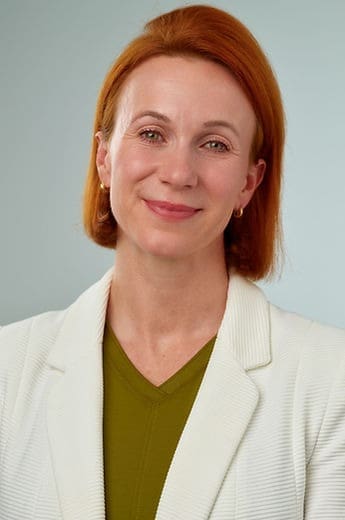
Lisa Sheerin, ICF PCC Executive Coach | Transforming Confidence, Communication & Leadership
Lisa works as an executive public speaking coach, actor, and group fitness instructor with over 20 years of experience. A graduate of a three-year drama school program in London, she began her career in theatre and film, where she faced and overcame imposter syndrome. Today, she empowers others to embrace their authenticity and transform self-doubt into confidence, combining her acting expertise, fitness training, and passion for personal growth. Her mission is to guide others toward a life where they can speak and live proudly.

Comments will display here