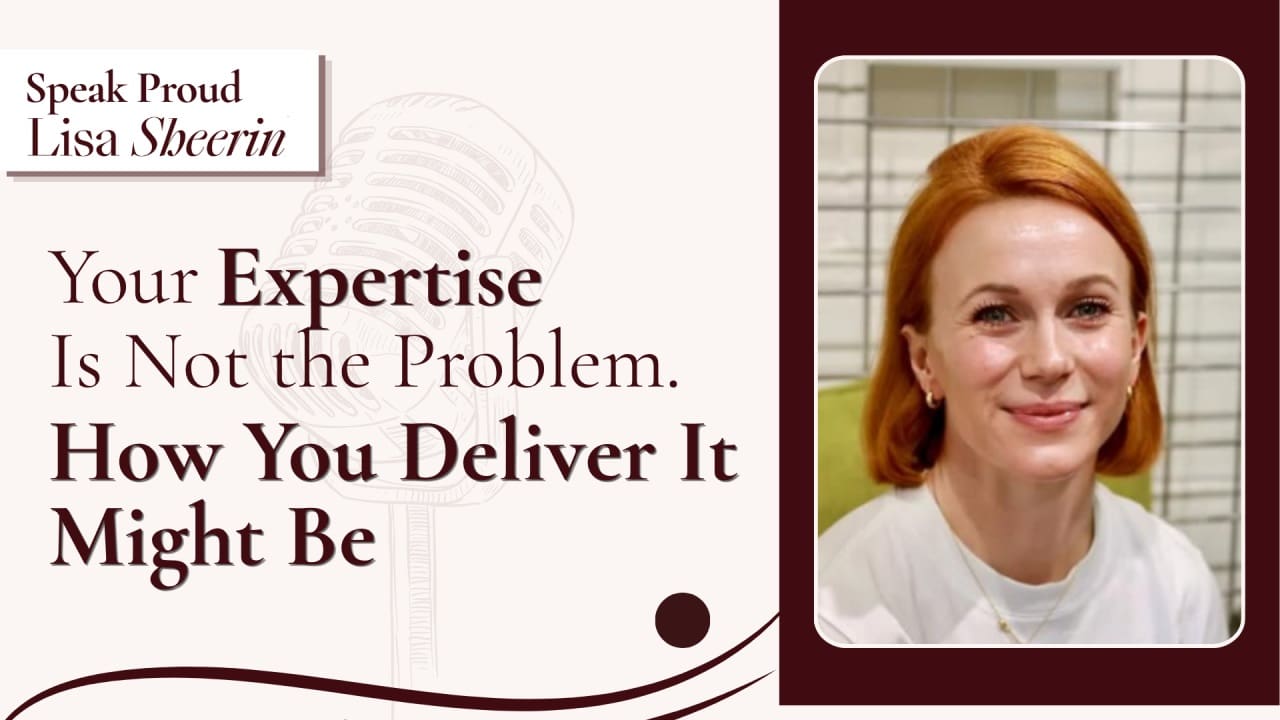
The Speak Proud Lead With Voice Framework: Turning Expertise Into Leadership Impact
You can be the most capable person in the room and still leave people unsure of your leadership.
Not because you lack experience, intelligence or good ideas. Sometimes, the gap is between what you know and what other people actually experience when you communicate.
Perhaps you have prepared thoroughly for a board presentation, but your message becomes less clear when challenged. Perhaps you know you are ready for a more senior role, but in the interview you give lengthy answers that bury your strongest points. Or perhaps your thinking is sound, yet your delivery does not quite convey the confidence and conviction you feel inside.
These moments matter because leadership is not judged solely by what you know. It is also experienced through how you communicate, particularly when the stakes are high.
This is why I developed the Speak Proud Lead With Voice Framework: to help leaders bring their expertise to life through the way they use their voice, presence, message and response under pressure.
1. Leadership is experienced, not just understood
Senior leaders are often promoted because they have a strong track record, deep expertise and the ability to solve difficult problems. Yet the communication demands of leadership change as responsibility grows. It is no longer enough to have the right answer. You need to make your thinking accessible, help others understand what matters and communicate in a way that builds trust.
Consider the difference between explaining every detail of a recommendation and helping a board understand the decision it needs to make. Both require knowledge, but the second also requires judgement about what to say, what to leave out and how to guide the conversation. The same applies when influencing a client, challenging a colleague or communicating a difficult decision to your team.
The challenge is that these skills are rarely tested in a comfortable environment. They are tested when someone questions your judgement, when the meeting moves in an unexpected direction or when you have only a few minutes to make your case. In those moments, the way you communicate can either reinforce your expertise or make it harder for others to recognise.
2. Your voice is more than the words you choose
We tend to focus on the content of communication because it feels tangible. We prepare the presentation, refine the wording and rehearse the key messages. Yet the way those words are delivered influences whether people experience them as clear, credible and considered.
Pace, tone, emphasis, articulation and vocal variety all contribute to the impression you create. Speak too quickly, and an important point can lose its weight. Deliver every sentence with the same emphasis and your audience may struggle to distinguish what matters most. Use a rising, uncertain tone when presenting a considered recommendation, and you may unintentionally make a strong view sound tentative.
This does not mean every leader needs a deeper voice, a polished performance or a particular speaking style. The aim is not to sound like somebody else. It is to develop enough awareness and flexibility to use your natural voice effectively, adapting your delivery to the message, the audience and the moment.
My work as a professional actor and commercial voiceover artist, alongside my executive coaching, has given me a particular appreciation of this relationship between intention and delivery. What we mean to communicate and what the audience hears are not always the same thing. Learning to close that gap can make a meaningful difference.
3. Presence is not about performing confidence
Physical presence is often misunderstood. Leaders may assume they need to stand in a particular way, make more eye contact or use bigger gestures to appear confident, but copying a set of behaviours without understanding what they communicate can feel unnatural and distracting.
Presence is better understood as the connection between your attention, your physical behaviour and the people you are communicating with. Are you fully engaged with the conversation, or already planning your next answer? Does your posture support the message you are delivering? Are your gestures helping people follow your thinking, or competing with it?
These details become especially important under pressure. A leader might look down at their notes throughout a challenging discussion, move constantly while explaining a decision or become so still that their delivery feels constrained. None of these behaviours automatically means a person lacks confidence. They are signals worth noticing, particularly when they appear repeatedly in the situations that matter most.
The goal is not to eliminate every natural movement or manufacture a perfect executive image. It is to make your physical presence work with your message, so that the people in front of you can focus on what you are saying and why it matters.
4. Clarity is a leadership skill, not a personality trait
Some leaders assume that being concise is simply a matter of being naturally articulate. In reality, clear communication is a skill that can be developed through deliberate choices about structure, relevance and audience.
When the pressure is on, even highly experienced people can over-explain. They add background to prove they have considered every angle, qualify their recommendations to avoid being misunderstood or continue speaking after the essential point has already landed. The intention is often positive: to be thorough, credible and helpful. The unintended effect can be that the audience has to work harder to find the conclusion.
A useful discipline is to ask yourself three questions before an important contribution: What does this audience need to understand? What is the one point I most want them to remember? What do I need them to do, decide or consider next? These questions help you organise your thinking around the outcome rather than the amount of information you can provide.
Clarity does not mean stripping away nuance or pretending that difficult decisions are simple. It means making the reasoning easier to follow, the recommendation easier to identify and the next step easier to understand. For a senior leader, that is not merely a presentation technique. It is part of helping other people make better decisions.
5. The real test is what happens when pressure changes your communication
It is relatively easy to communicate well when you have time to prepare, the audience is receptive, and the conversation follows the plan. The more revealing moments arrive when something changes: a challenging question, an unexpected objection, a difficult silence or a senior stakeholder who disagrees with you.
This is where voice, presence and clarity need to work together. You might know your material but struggle to organise an answer in real time. You might have a sound recommendation but soften it so much that your position becomes difficult to identify. Or you might focus so intently on getting the words right that you stop responding naturally to the people in front of you.
The answer is not simply to practise more or memorise better scripts. It is to build the awareness and flexibility to recognise what is happening and make useful adjustments in the moment. That might mean leading with your conclusion, changing your vocal emphasis, noticing a distracting physical habit or responding directly to the question rather than delivering the answer you had prepared.
The Speak Proud Lead With Voice Framework brings these elements together: voice, presence, clarity and the ability to communicate effectively under pressure. Rather than treating communication as a collection of isolated presentation tricks, it looks at how the elements interact, helping leaders communicate in a way that reflects their capability and supports the outcomes they need to achieve.
My work combines executive coaching with the practical disciplines of acting and voice. That means looking beyond what a leader says to understand how they deliver it, what happens when the pressure rises and what they can change without losing their authenticity. The aim is not to create a performance of leadership. It is to help the leadership that is already there come through more clearly.
Where does your communication have the greatest impact?
You do not need to overhaul your entire communication style to make progress. Often, the most useful starting point is identifying the situation in which the gap between your expertise and your delivery is most noticeable.
Is it when presenting to the board, influencing a client, answering unexpected questions, challenging a more senior colleague or communicating a decision that others may find difficult? Understanding where the pressure shows up gives you a much clearer place to begin.
If you would like to explore your own communication, take my free five-minute Speak Proud Executive Presence Assessment, available in the Featured section of my LinkedIn profile. It looks at Delivery, Presence and Clarity, helping you identify which area may need the most attention and where greater consistency could make the biggest difference.
When the stakes are high, which part of communication do you find most challenging: your voice, your physical presence, getting your message across clearly or responding under pressure?

Lisa Sheerin, ICF PCC Executive Coach | Transforming Confidence, Communication & Leadership
Lisa works as an executive public speaking coach, actor, and group fitness instructor with over 20 years of experience. A graduate of a three-year drama school program in London, she began her career in theatre and film, where she faced and overcame imposter syndrome. Today, she empowers others to embrace their authenticity and transform self-doubt into confidence, combining her acting expertise, fitness training, and passion for personal growth. Her mission is to guide others toward a life where they can speak and live proudly.

Comments will display here